


If you search online for “American version of 2nd-generation ultrasound” or “American version of Ulthrea,” and select “American ultrasound,” the results often appear together, leading many people to think they are three different devices. Direct answer: These three terms generally refer to the same type of second-generation focused ultrasound lifting device developed in the U.S. They’re just called differently depending on the clinic or translation habits. Be sure to confirm with the clinic ahead of time about the actual model and whether it’s authentic.

The content in this article is for reference only and does not constitute medical advice. The actual results of treatment vary depending on individual constitution and skin condition; for a detailed assessment, please refer to the evaluation by the clinic director in person.
Table of Contents
How did these three names come about?
The principle behind these devices is to utilize focused HIFU energy to penetrate deep into the skin and stimulate the production of new Collagen, thereby achieving a lifting and firming effect. Terms like “sound waves” and “HIFU” are commonly used in the industry to refer to this type of device. The labels “American version” or “USA-made” are used to indicate that the device was developed and produced in the United States, distinguishing it from alternative models offered by some local South Korea manufacturers. “Second generation” usually refers to upgraded models with improved energy delivery and comfort compared to the first generation.
If you want to know how many shots are needed per treatment, you can refer to:How many shots are needed with HIFU? A complete breakdown of the myths surrounding the number of pulses in South Korea’s advanced ultrasound therapy。
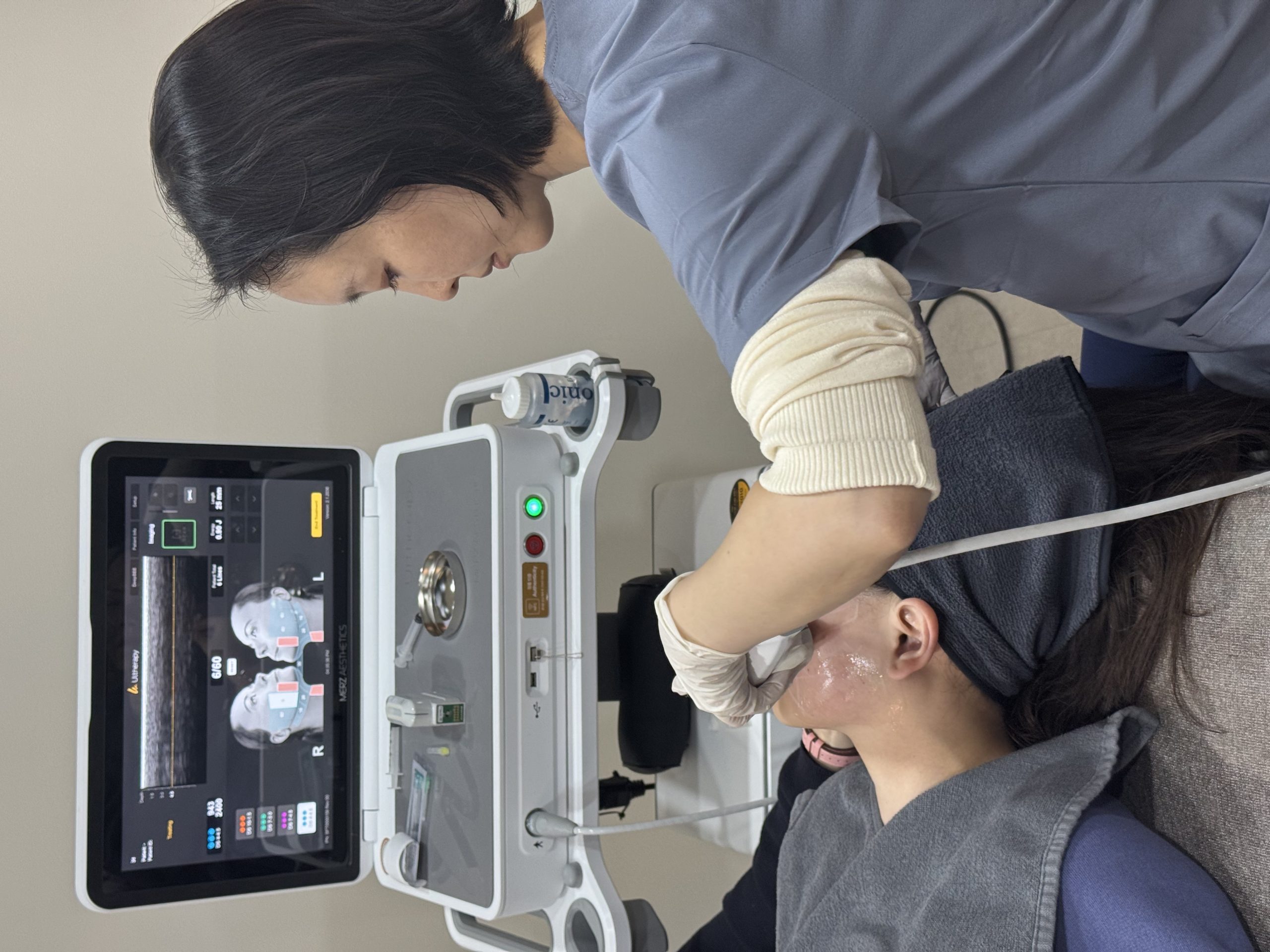
Are all these names referring to the same device?
In most cases, terms like “this type of HIFU lifting device,” “Ulthrea,” and “American ultrasound” all refer to the same generation of second-generation HIFU lifting devices made in the United States, such as the commonly available Ultherapy PRIME. However, due to the lack of a unified Chinese translation, different clinics and beauty industry writers use various names online, which can lead people to think they are several distinct devices.
It’s recommended that when choosing a clinic, don’t rely solely on its name—instead, ask directly about the official model of the equipment, its original manufacturer certification, and its source of import, so you can confirm whether what the clinic uses is genuine.
What are the differences between US-made ultrasound devices and Korean-made ones?
Short answer: “American-style ultrasound” generally refers to genuine devices developed by manufacturers in the U.S., whose energy delivery and safety features are backed by extensive long-term clinical data. “South Korean-made ultrasound,” on the other hand, are alternative models developed by local Korean firms. While they’re usually cheaper, they have relatively less certification history and fewer accumulated clinical studies.
The two may differ in terms of energy probe design, treatment depth, and the recommended number of sessions per treatment. Their effectiveness and duration also vary depending on individual skin types and levels of sagging. If you’d like to understand how Sofwave, HIFU, and Thermage compare in terms of their performance, you can refer to:Which is right for me: Sofwave, HIFU, or Thermage? A comparison of the three top lifting devices in terms of performance and effects。
Who is a good candidate for this American version of the device?
When the skin starts to show mild sagging, the Nasolabial Fold Correction becomes more pronounced, and facial contours lose definition, those who don’t want to undergo surgical facelifts usually consider these types of ultrasound treatments. Pregnant women, those with inflamed wounds on their skin, or those who have recently had other invasive treatments are not advised to proceed right away. Whether such treatment is suitable actually depends on a personal consultation by a specialist, who will assess the skin condition and degree of sagging before making a decision—self-judgment should be avoided.
If you’d like to see a compiled list of prices, risks, and ideal candidates for more popular cosmetic procedures, check out:【2026 Update】Which Medical Aesthetics Clinics Are the Best in South Korea? Comprehensive Guide to Top 10 Popular Procedures – Prices, Risks, and Ideal Candidates。
Frequently Asked Questions
Q1: Are these three names referring to the same device?
These terms generally refer to the same type of second-generation focused ultrasound lifting devices developed in the U.S. Their names vary depending on the clinic or translation preferences. As for the actual model and whether it’s genuine, it’s recommended to check directly with the clinic director before making a choice.
Q2: What are the differences between American and Korean ultrasound devices?
U.S.-made ultrasound devices generally refer to authentic instruments developed by manufacturers in the United States, with long-term clinical data supporting their energy delivery efficiency and safety. Korean-made ultrasound devices, on the other hand, are alternative models developed by local South Korea manufacturers. While they tend to be more affordable, they have relatively shorter histories of certification and clinical data collection.
Q3: Who is a good candidate for the Ulthrea treatment?
Those whose skin has begun to show mild sagging and who want to refine their facial contours without undergoing surgery generally benefit from learning about ultrasound treatments in the U.S. To determine whether it’s the right option for them, it’s advisable to have a consultation with the clinic director to assess their skin type and degree of sagging first.
Book a consultation at DAN-A in Myeongdong now!
If you’re wondering whether you’d be a good candidate for this type of treatment, feel free to contact DAN-A in Myeongdong through the following channels, where the clinic director will conduct a personal consultation and assessment.
WhatsApp:
Number search: +821072188830
WhatsApp link:https://wa.me/821072188830
Instagram: Private message @dana_clinickrProvide the appointment date, number of people, and the issues you’d like to address, and the clinic will help arrange a time slot for Chinese-speaking service.
Address: 3rd Floor, Arnuvo Centum, 21, Myeongdong 7-gil, Jung, Seoul Special City – just a 2-minute walk from Exit 6 of Euljiro Station.
Clinic hours: Open Monday, Tuesday, Wednesday, and Friday from 11:30 to 20:30; Saturday from 11:00 to 17:00. Closed on Thursday, Sunday, and public holidays.
The content in this article is for reference only. Actual treatment results may vary depending on individual constitution and skin condition. For a detailed assessment, please refer to the evaluation by the clinic director in person.