

Ultherapy Prime, the American version of the second-generation ultrasound treatment, utilizes HIFU technology to deliver deep-level lifting effects by targeting the SMAS layer. Meanwhile, Thermage FLX employs monopolar RF technology, focusing on the dermal layer and subcutaneous tissues to effectively tighten Pores throughout the face. Since their mechanisms work differently and each offers distinct benefits, they don’t necessarily replace one another.
Many people who are new to medical aesthetic treatments often struggle to understand the differences between ultrasound and radiofrequency therapies, sometimes even thinking that the two can replace each other. In fact, the American version of second-generation ultrasound and Phoenix radiofrequency represent two entirely different technical approaches. Only by understanding how they work can one determine which option is better suited to their skin type—or whether it’s worth trying both.
Table of Contents
Fundamentally different working principles: HIFU ultrasound vs RF radio waves
The American version of the second-generation ultrasound device utilizes HIFU (High-Intensity Focused Ultrasound) technology. By using a probe to focus ultrasonic energy at specific depths, it creates heat coagulation points that stimulate the production of new Collagen, thereby achieving lifting effects. On the other hand, the Phoenix radio wave therapy employs RF monopolar waves, allowing electric current to pass through the skin and generate impedance heat, which directly heats the dermal layer and subcutaneous fat layer. This causes the Collagen to contract and realign, resulting in firming effects.

Effect Depth Comparison: Fascial Layer Lifting vs Multi-Layer Tightening
The biggest advantage of the American version of the second-generation ultrasound device is its ability to deliver energy precisely to the SMAS layer—the same layer targeted in surgical facelift procedures. As a result, the lifting effect is usually quite noticeable, especially around the jawline and Nasolabial Fold Correction area. In contrast, the Phoenix radiofrequency waves cover a wider range of layers, from the dermal layer down to the subcutaneous fat layer, providing a more comprehensive tightening effect. It’s particularly effective for those with enlarged Pores or loose skin that hasn’t progressed to significant sagging.
| Comparison Items | US Version of Second-Generation Ultherapy Prime | Phenix Radio Thermage FLX |
|---|---|---|
| Technical Principles | HIFU ultrasound | Monopolar Radio Waves (RF) |
| Primary functional levels | SMAS layer, dermal layer | Dermis layer, subcutaneous fat layer |
| Focus on Results | Lift facial contours, tighten the jawline | Overall firm texture with fine Pores |
| Duration of a single treatment session | About 60–90 minutes | About 60–90 minutes |
| Post-surgery recovery period | Almost no recovery period needed | Almost no recovery period needed |
| Long-lasting results | About 12–18 months | About 12–18 months |
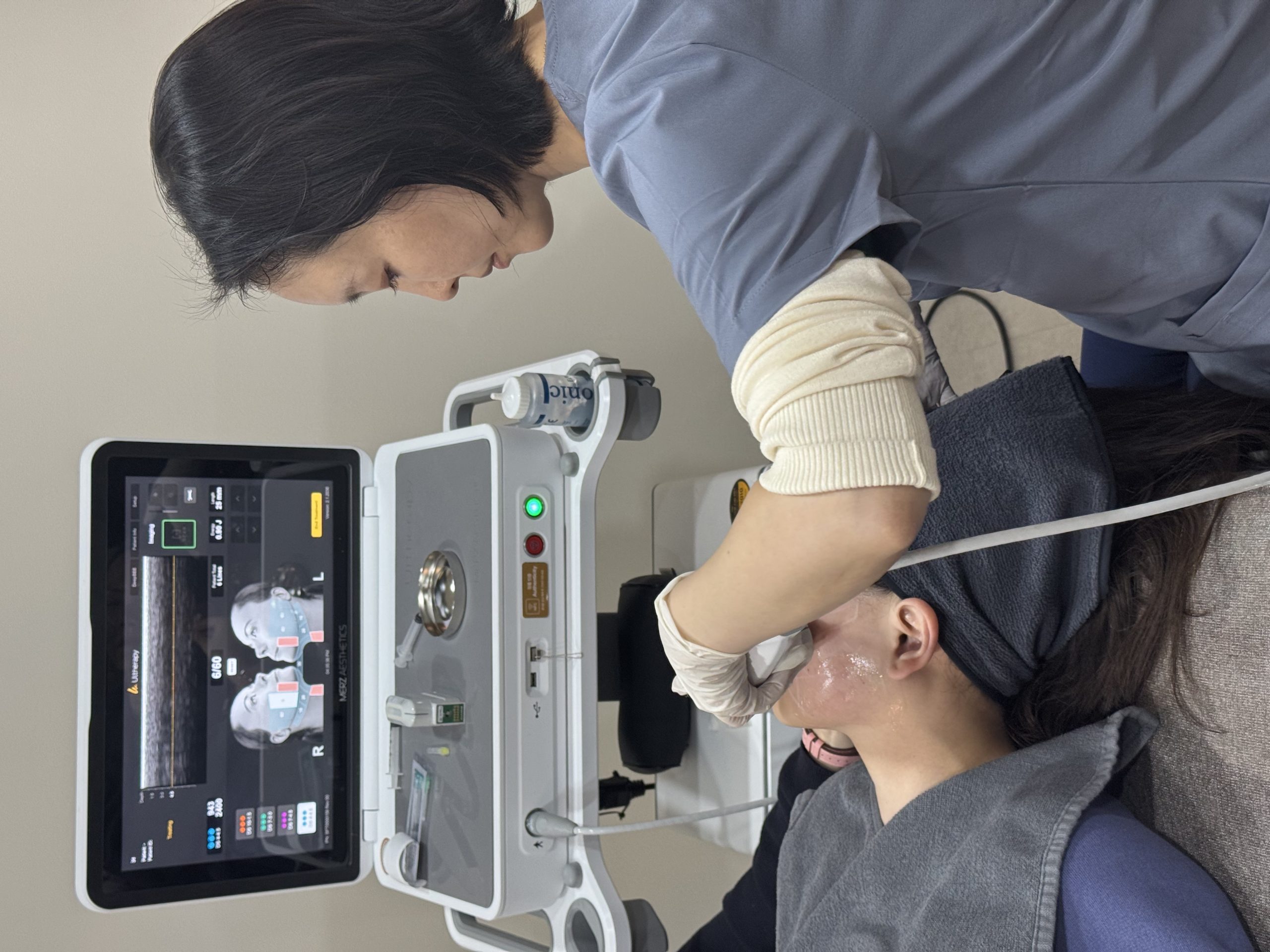
Effect Comparison: Lifting Lines vs Tightening Pores
If what concerns you are the contours of your face—such as a less defined jawline or gradually deepening Nasolabial Fold Correction—then the lifting effects provided by the second-generation American version of ultrasound therapy tend to be more noticeable. On the other hand, if you’re focused on the overall condition of your skin, such as enlarged Pores, loose skin texture, or wanting fuller, tighter cheeks, the comprehensive tightening effect offered by the Phoenix radio frequency therapy would better meet your needs. In practice, DAN-A, the director at Myeongdong’s clinic, also recommends the optimal combination of treatments based on each client’s facial structure, degree of sagging, and budget.

Recovery period and how it feels compared
Both devices offer non-invasive treatments, with virtually no noticeable recovery period required—patients can return to work and apply makeup on the same day as the procedure. In terms of sensations, some clients report a more pronounced sense of heat or tingling when the second-generation US version of ultrasound is applied to the fascial layer; whereas the Phoenix radiofrequency uses gradual heating, resulting in generally milder discomfort. Clinics for both treatments adjust the energy level and anesthesia method based on each individual’s pain threshold to minimize discomfort.

Frequently Asked Questions FAQ
Q1: Is the difference between the two devices significant enough to result in completely different outcomes?
A: There’s a noticeable difference. Ultrasound is better for deep-layer lifting, while radiofrequency focuses on overall firming. Since they serve different purposes, it’s recommended to decide your priority based on the areas you’re most concerned about.
Q2: Between the US version of the second-generation ultrasound device and the Phoenix radio wave device, which one is more painful?
A: It varies from person to person. Ultrasound delivers heat more intensely when applied to the fascial layer, while radio waves provide gradual heating. Most clients report that the discomfort from radio waves is milder.
Q3: How long can each of the two treatment options last?
A: Generally, it can last around 12–18 months, though the actual duration may vary depending on individual metabolism, daily routine, and skincare habits.
Q4: Are the American-style devices used in South Korea the same as those in Taiwan?
A: DAN-A in Myeongdong uses genuine American-made equipment, with the probes and consumables all carrying original serial numbers for verification. It’s recommended to confirm the model and probe version with the clinic beforehand before your appointment.
Q5: How long should I wait before getting another treatment after ultrasound or radiofrequency therapy?
A: It’s generally recommended to wait at least 6 months, but the actual interval will be adjusted by a doctor based on an individual’s skin condition and response to the treatment.
If you’re still hesitating about which one to choose, feel free to check this out as a reference.A Comprehensive Guide to the US Version of Ultherapy PRIME 2nd Generation, as well asCurrent Prices & Buying Guide for Authentic US Version of Phoenix RadioYou can also take a look first.What’s the difference between radiofrequency and ultrasound? A comprehensive comparison of various lifting devicesLearn more about available device options. For a deeper understanding of the medical background behind HIFU and RF technologies, you can refer toU.S. FDA Medical Device Information Website。